
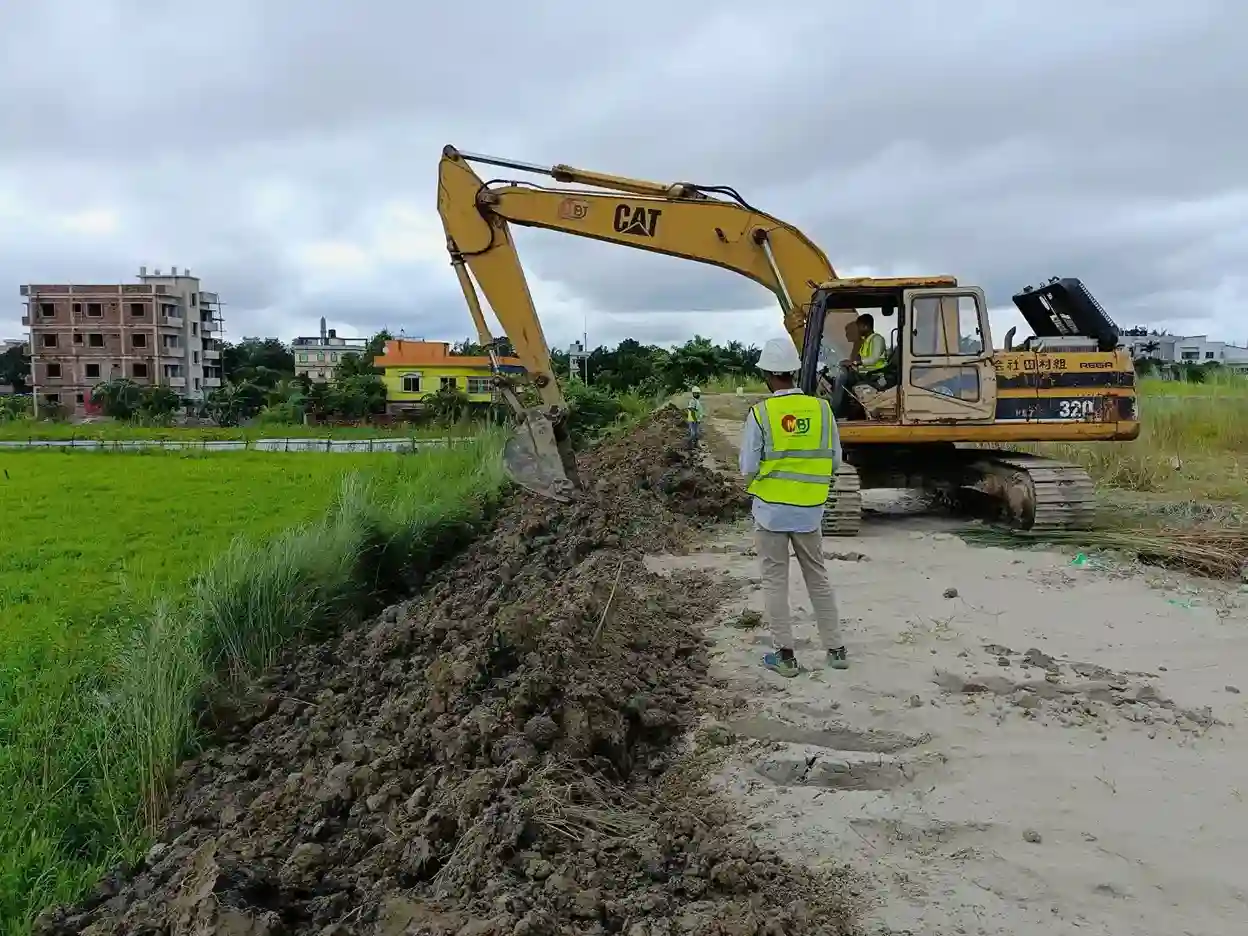
Choosing the right heavy equipment is one of the most critical — and most overlooked — decisions in any Bangladesh construction project.
Pick the wrong machine and you’ll waste time, blow your budget, and slow progress to a crawl. Industry data consistently shows that equipment mismatch inflates total project costs by 20–30% — a margin that can flip a profitable contract into a loss.
This guide gives you a clear, step-by-step framework for making the right choice — whether you’re breaking ground on a road in Dhaka, a high-rise in Chattogram, or a large infrastructure project anywhere in Bangladesh.
1. Understand Your Project Requirements Before Anything Else
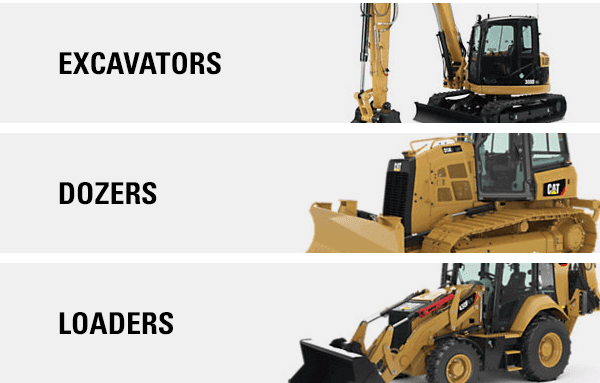
Before you look at a single machine, you need absolute clarity on what your project demands. Equipment that performs perfectly on one job type can be completely wrong — and expensive — on another.
Ask yourself these five questions before contacting any equipment provider:
- Project type: Road construction, building construction, land development, or utility excavation?
- Scale: Small residential, medium commercial, or large-scale infrastructure?
- Terrain: Soft waterlogged soil, hard ground, cramped urban space, or open rural site?
- Duration: Short-term (weeks) or long-term deployment (months)?
- Access constraints: Are there weight limits on approach roads leading to the site?
Each answer narrows your equipment options significantly. Use this quick reference to get started:
| Site Condition | Best Equipment Choice |
|---|---|
| Soft or waterlogged soil | Crawler excavator (rubber tracks) |
| Tight urban or narrow access | Compact / mini excavator |
| Large open land clearing | Bulldozer or motor grader |
| High-rise building construction | Tower crane + concrete pump |
| Road construction and leveling | Motor grader + compactor + paver |
| Material handling and truck loading | Wheel loader |
2. Choose the Right Type of Heavy Equipment for Each Task
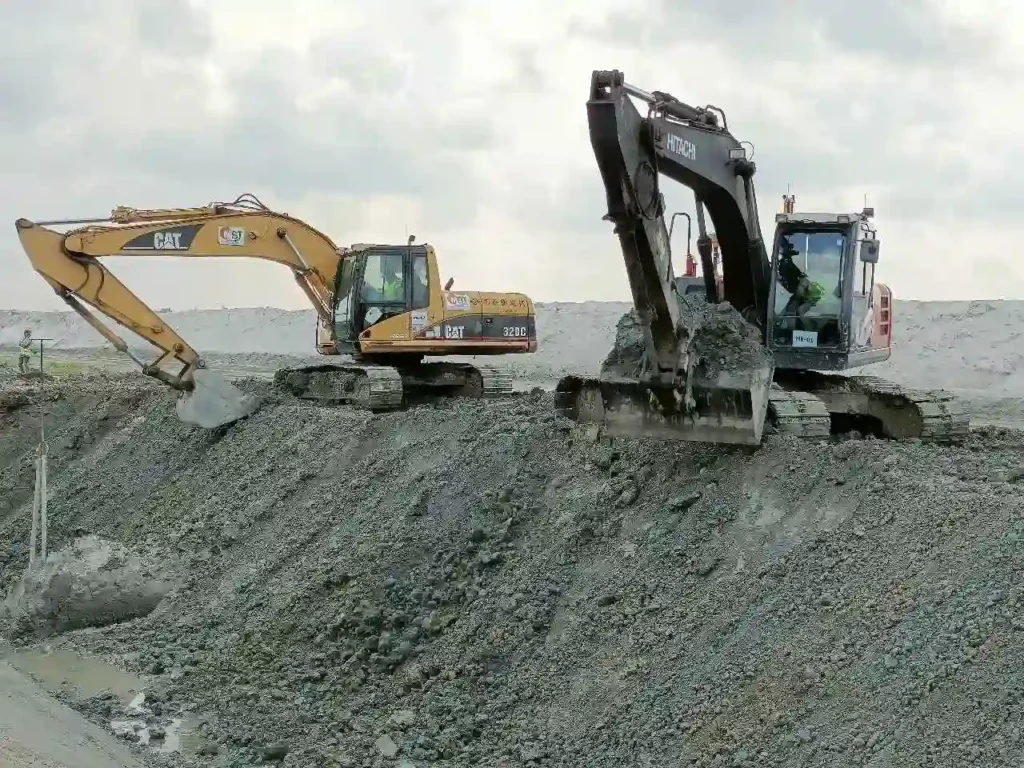
Different machines serve completely different purposes. Here’s a practical breakdown of the most commonly used heavy equipment in Bangladesh — and what each one does best:
🔹 Excavator
The workhorse of construction. Best for digging foundations, trenching for utilities, and earth-moving. Available in sizes ranging from mini excavators for tight urban work to large crawler excavators for heavy-duty infrastructure projects. The single most versatile machine on any Bangladesh construction site.
🔹 Bulldozer
Ideal for large-scale land clearing, pushing significant volumes of soil, and rough terrain grading. Most effective on large, open sites where terrain needs major reshaping before any other work can begin.
🔹 Wheel Loader
Built for surface-level material handling — loading dump trucks, moving aggregate, managing stockpiles. Faster and more maneuverable than an excavator for loading tasks. A single wheel loader can replace 8–10 manual laborers on material movement work, dramatically reducing site labor costs.
🔹 Motor Grader
Essential for road construction and fine surface grading. Creates smooth, precise surfaces for both sub-base preparation and final road leveling. Widely used on LGED and RHD road projects across Bangladesh.
🔹 Crane
Non-negotiable for high-rise building projects and bridge construction. The right crane type — tower, mobile, or crawler — depends on lifting height, load requirements, and site access. Using an undersized crane is both a safety risk and a productivity killer that can stall an entire project.
⚠️ Key Fact: Using the wrong equipment type can inflate your total project cost by 20–30% through inefficiency, rework, and delays. Always match the machine to the task — not just whatever is available or cheapest on the day.
3. Rent or Buy? Make the Financially Smart Decision
This is where most businesses lose money without realizing it. The rent vs. buy decision isn’t just about upfront cost — it’s about total cost of ownership across your entire project lifecycle.
✅ Renting (Recommended)
- No large upfront capital investment
- Zero maintenance or repair liability
- Access to modern, well-maintained machinery
- Flexible — scale up or down as project phases change
- No storage or insurance overhead between projects
- Get the exact right machine for every task
⚠️ Buying (Only If...)
- Same equipment runs 200+ days per year
- Capital available for purchase AND ongoing maintenance
- Secure storage facility already exists
- Certified operators and mechanics on permanent staff
- Predictable 3–5 year project pipeline to justify the investment
- Utilization data clearly supports the decision
For most contractors in Bangladesh — particularly those working on project-by-project contracts — renting is the smarter financial choice. You preserve working capital, eliminate maintenance risk, and deploy the right machine for each specific job rather than forcing every task onto equipment you happen to own.
4. Always Inspect Equipment Condition Before Deployment
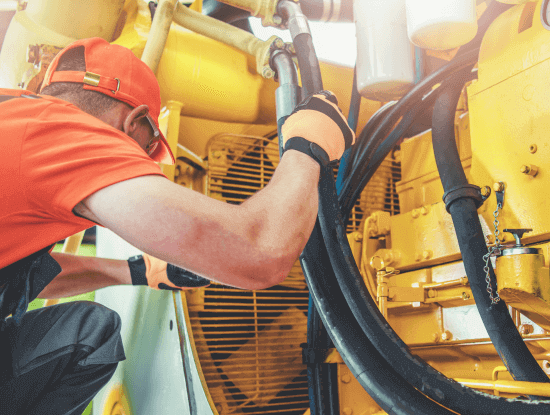
Not all machines perform the same — even identical models can vary dramatically based on maintenance history, operating hours, and how previous operators treated them.
Before accepting any equipment on site, verify these six points:
- Engine condition: Listen for knocking sounds at startup, check for abnormal smoke color, verify oil is clean and at the correct level
- Fuel consumption: Compare actual consumption to the manufacturer spec — significantly higher consumption signals internal engine wear
- Hydraulic system: Test all hydraulic functions for smooth, responsive operation with no sluggishness or visible leaks
- Maintenance history: Request the service logbook — regular oil and filter changes at the correct intervals are a strong positive indicator
- Operating hours: A machine with 8,000+ hours warrants more detailed inspection than one at 2,000–3,000 hours
- Safety systems: Verify ROPS, seat belt, warning indicators, and emergency shutoffs all function correctly
Well-maintained equipment doesn’t just perform better — it reduces unplanned downtime by up to 40%, directly protecting your project schedule and budget from avoidable disruption.
5. Evaluate True Cost vs. Actual Productivity
The cheapest option is almost never the most cost-effective. This is one of the most expensive traps contractors in Bangladesh fall into — especially in competitive tender environments where project margins are already thin.
Evaluate equipment value in terms of cost per unit of output, not just the daily rental rate:
- Speed advantage: A more capable excavator completing work in 10 days vs. 15 saves 5 days of labor cost, fuel, and site overhead
- Labor replacement: A high-capacity wheel loader can replace 8–10 manual laborers, often paying for itself within the first week
- Rework prevention: Precision equipment like a GPS-equipped grader can eliminate additional grading passes entirely
- Fuel efficiency: Modern, well-maintained machines often justify a 10–15% higher day rate through lower fuel consumption per cubic meter moved
Paying 10–15% more for better equipment frequently saves 25–30% on total project cost. The math almost always works in favor of quality over cheap.
6. Partner with a Reliable Equipment Provider — Not Just Any Vendor
Your equipment provider is not just a vendor — they’re a project partner whose performance directly affects your timeline, your costs, and your reputation with the client.
A reliable provider should be able to:
- Recommend the right machine for your specific site conditions — not just whatever they happen to have available
- Provide documented maintenance history and a verified equipment condition report
- Offer fast on-site technical support when breakdowns occur
- Have backup equipment ready to minimize downtime when a machine needs repair
- Offer flexible rental terms that align with your actual project timeline
When evaluating providers, always ask for references from contractors who’ve run similar project types. A company that has successfully supported road construction in Dhaka’s dense conditions, or coastal infrastructure work in Chattogram, has proven its equipment and service under real Bangladesh field conditions.
Why Leading Contractors in Bangladesh Trust Musashi Bangladesh Japan Ltd.
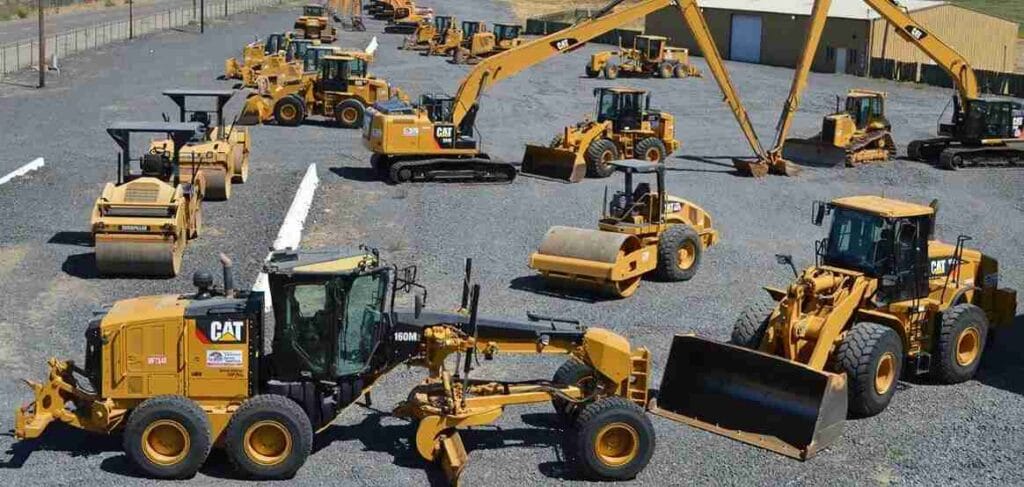
At Musashi Bangladesh Japan Ltd. (MBJ), we combine Japanese engineering standards with deep local expertise in Bangladesh construction. Our heavy equipment fleet is maintained to manufacturer specifications, and our team understands the unique demands of construction projects across Bangladesh.
- Construction equipment rental
- Full equipment maintenance support
- Expert machine selection guidance
- Quality machinery for all project sizes
- Fast on-site technical response
- Flexible rental terms to match your timeline
Final Takeaway
Equipment selection is a strategic decision that directly affects your project timeline, cost structure, and reputation as a contractor in Bangladesh’s competitive construction market.
When you approach it with a clear framework:
- Understand your project fully before opening any equipment catalog or calling any supplier
- Match the machine to the task — never the other way around
- Choose renting over buying unless your utilization data clearly justifies ownership costs
- Inspect every machine thoroughly before it arrives on site
- Work with a proven partner who has real accountability when equipment fails
The result: you save time, reduce costs, and complete projects that build your reputation in Bangladesh’s construction industry.
Ready to plan your next project’s equipment needs? Musashi Bangladesh Japan Ltd. has the machinery, the expertise, and the team to support your construction goals — from initial site assessment to project completion.